
Marking its quickest rise in over seven years, India's services sector activity expanded for the fifth successive month in February, tracking spike in business orders, renewed export demand and strengthening business confidence, a monthly survey showed on Wednesday. The IHS Markit India Services Business Activity Index rose from 55.5 in January to 57.5 in February. This is the fastest expansion in services output since January 2013.
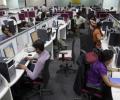
Business confidence remained positive in August and was driven by upbeat forecasts of sales, an expected improvement in demand and promotional activities
.jpg)
The HSBC Emerging Markets Index, a monthly indicator derived from the PMI surveys, continued its upward trajectory in November on the back of faster manufacturing growth.

India's services sector growth rate saw a slight fall in July but remained in the positive terrain for the ninth month in a row, amid rise in new orders and employment levels holding up, an HSBC survey says.

Dietician Komal Jethmalani provides expert help.

The Nikkei India Manufacturing PMI dipped from 50.3 in November to 49.1 in December.

BSE Bankex and Telecom indices led the fall.

The HSBC India Manufacturing Purchasing Managers' Index for the manufacturing industry climbed from 49.6 in October to 51.3 in November on the back of a rebound in new orders and output.

The latest PMI showed inflation pressures ebbed further last month with both costs of raw material and prices charged rising at a slower pace than March.

The index, however has remained above the 50 mark - below which it indicates contraction - for more than three years now.
India's manufacturing sector growth improved in November, registering the fastest pace in five months, driven by a strong pick up in new orders and improved purchasing activity, an HSBC survey said on Monday.
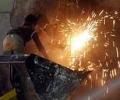
India's manufacturing sector witnessed a slowdown in July - the weakest growth rate since November - because of moderation in domestic and export orders amid sagging global economy, an HSBC survey said.

NSE Nifty finished higher by 46.05 points, or 0.39 per cent, at 11,707.90. Asian Paints was the top gainer in the Sensex pack, rallying 6.32 per cent, followed by Nestle India, HUL, Bajaj Auto, IndusInd Bank, Tata Steel, Maruti and PowerGrid.
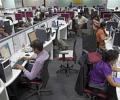

The Nikkei Markit India Manufacturing Purchasing Managers' Index (PMI) -- a gauge of manufacturing performance -- fell to 52.3, down from October's 22-month high of 54.4.

A reading above 50 indicates expansion while a one below this level means contraction.

India's manufacturing sector growth slowed marginally in February, although strong domestic orders were likely to support output expansion in the coming months, an HSBC survey has said.

The recovery in the Indian services sector was sustained in November as new work orders supported business activity growth and the first rise in employment in nine months, a monthly survey said on Thursday.

Bumper liquidity as a result of global central bank stimulus measures should prevent a sharper downturn.

Input prices rose at their fastest rate in 14 months but manufacturers absorbed much of the increase
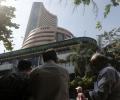
Financials emerged as the top gainers while auto shares rallied on robust September sales
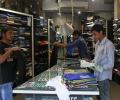
The improvement in business conditions promoted job creation, while confidence towards the year-ahead outlook for activity was at a four-month high during March.
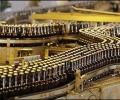
A reading above 50 means the sector is expanding, while a reading below 50 means contraction.
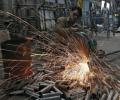
Manufacturing growth in India lost momentum in February.

The Nikkei India Services Purchasing Managers' Index, which tracks services sector companies on a monthly basis, stood at 52 in September, down from August's 43-month high of 54.7, pointing to a slower and moderate rate of expansion.
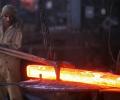
The Nikkei Markit India Manufacturing Purchasing Managers' Index (PMI) -- an indicator of manufacturing activity -- fell to 49.6, down from 52.3 in November, coming below the crucial 50 threshold which separates contraction from expansion.
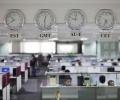
Manufacturing production growth eased in May, which combined with the slowdown in services resulted in a weaker increase in private sector output, the survey said.
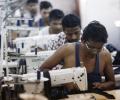
That prompted manufacturers to add jobs for the first time since June.
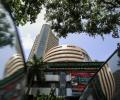
The NSE Nifty, however, ended a shade higher by 6.65 points or 0.06 per cent at 10,442.20
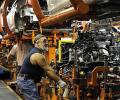
Regarding employment, the manufacturing sector hiring remained broadly unchanged.
The survey showed firms passed on a greater cost burden to consumers. Prices charged rose at their fastest pace since October.

The HSBC Emerging Markets Index, a monthly indicator derived from Purchasing Managers' Index surveys, inched up to 50.6 in May from 50.4 in April, indicating weak output growth across global emerging markets.

HSBC's purchasing managers' index was released on Tuesday.

Losses largely came from the metal index, followed by power, infrastructure, realty, PSU, oil and gas, capital goods, FMCG, healthcare, auto and banking.

The GST rate for the sector has not yet been finalised by the government.

A reading above 50 represents expansion while one below means contraction.

Manufacturing of consumer goods, like food and liquor continued to improve in September.

The Nikkei Markit India Manufacturing Purchasing Managers' Index increased to 50.7 in February
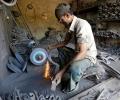
Supported by greater demand from both domestic and external markets, total new business rose at the fastest pace since March

The NSE Nifty gained 77.85 points, or 0.71 per cent, to finish at 11,008.30. Intra-day, it shuttled between 10,821.55 and 11,035.65.
